Need concrete driveways in Richmond?
- Introductions to independent local concrete providers
- Written quotes before any pour
- Schedules planned around family routines
- No obligation to proceed
No obligation
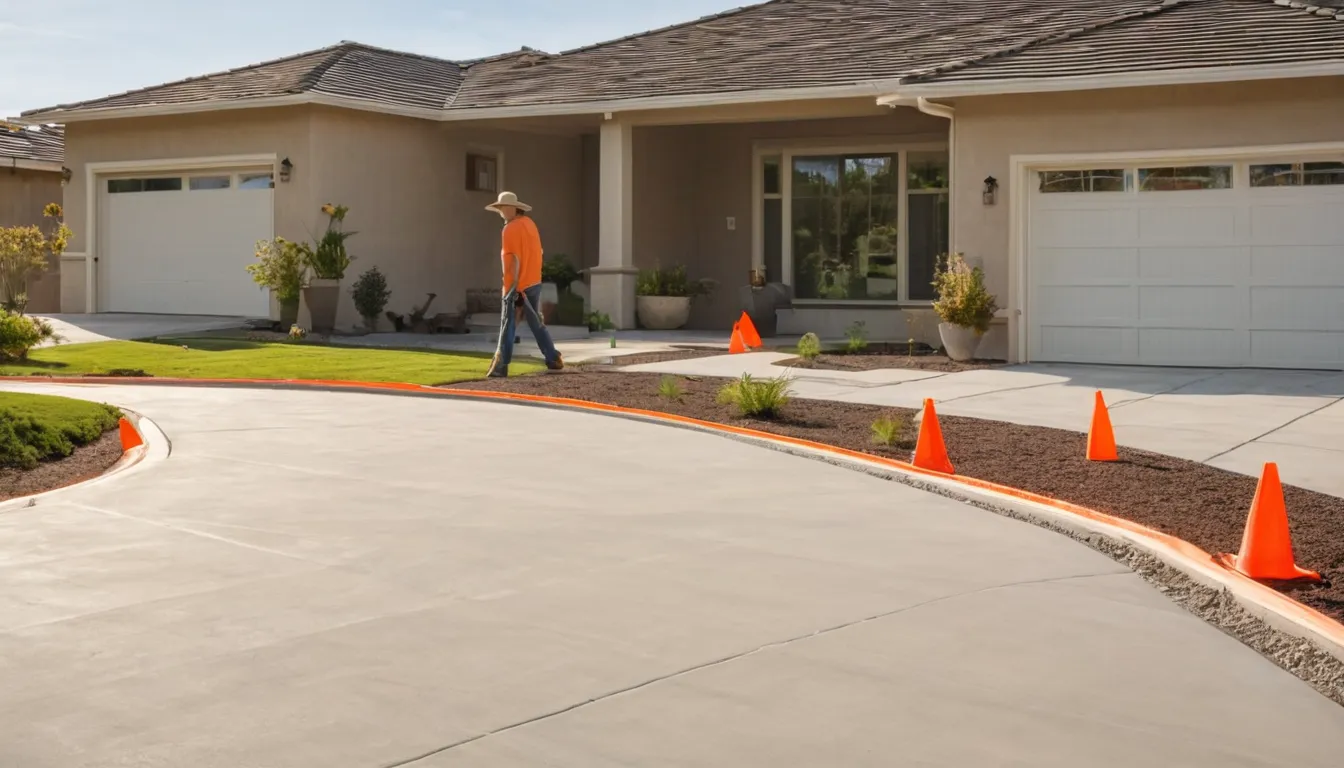
A concrete driveway is the first thing your household uses each morning and the last thing it crosses at night. When it cracks, sinks or pools water, daily life gets harder. Replacing it is a big job, and mistakes in the base or slope are costly to fix later.
Diijk Concrete is a referral service. We connect homeowners in Richmond and the Richmond area with independent local providers who pour driveways. The provider does the work. We make the introduction, so you spend less time searching. Ask for a written quote, a clear schedule and a plan for keeping the car and kids safe while the concrete cures.
Maybe you have patched the same slab twice. Maybe the car bumps over a lifted edge every morning. Either way, a worn driveway is a safety issue, not just a looks issue. Tripping, pooling water and uneven surfaces affect everyone in the house.
This page covers new concrete driveways. Early planning is the easiest way to avoid disruption.
Look for these before you decide:
One hairline crack is rarely a reason to replace everything. Many cracks across the whole slab usually are.
Concrete driveway repair can work for small, shallow damage on a sound base. If the base has washed out or the slab has settled in several places, new concrete is often the safer choice. A local provider can look at the slab and tell you which one fits.
Do not ignore cracks that run along the garage or foundation. If you see doors that stick or gaps in stucco near the slab, ask foundation repair experts to assess the house before any new pour. Concrete flatwork cannot fix a structural problem.
A typical job follows a set order:
Ask the provider to list each step in the quote. Nothing should be a surprise on pour day.
Three things decide how long a driveway lasts.
Base. A compacted gravel layer keeps the slab from settling. Skipping it saves a little now and costs much more later.
Slope. Water must run away from the garage and house. Even a gentle fall matters on long dry seasons followed by heavy winter rain.
Schedule. Pick a stretch when the weather is calm and the household can park elsewhere.
Most home driveways are poured about four inches thick. Heavier trucks, RVs or a lot of turning may call for more thickness or added reinforcement. Ask what the provider recommends and why.
For finish, a broom texture gives grip and is the usual choice for slopes. Smoother finishes look clean but can be slick when wet. Decorative options exist, but keep grip first.
The apron is the part of the driveway that meets the street. Many cities control its width, slope and thickness, and some require a permit. Ask the provider who handles permits and what the rules are for your address. Check whether a homeowners association needs to approve the plan too.
Fresh concrete and family life do not mix well without a plan. Park cars on the street in advance. Mark the work area and keep children and pets well away from the forms and equipment. Ask for a day-by-day outline so you know when the garage is blocked.
Providers in our network are independent. Still, ask every provider the same questions:
A clear provider answers plainly. Be careful with anyone who dodges details.
Keep people and pets off for the time the provider gives you. Foot traffic usually comes first. Vehicles wait longer, often a week or more. Keep sprinklers pointed away while the surface cures.
Sealing can help protect against stains and moisture. Ask what timing suits your slab and how often it needs a refresh. Wash the surface gently, and avoid harsh de-icing products if your area sees frost.
Request a callback to check provider availability, or send a request for an estimate. Either way, you will get a written quote before any work is scheduled.
Providers can break out the worn driveway and take the debris away, so your yard stays usable.
Compacted gravel and a planned slope help the new slab stay level and shed water.
Forms set the shape and edges, while mesh or rebar adds strength against cracking.
The provider places, levels and textures the concrete, then cuts joints and protects the surface.
Prices vary by size, site access, thickness and local rates. These typical U.S. ranges are a starting point, so always get a written quote.
| Item | Typical range | Notes |
|---|---|---|
| Standard poured driveway | $6 – $12 per sq ft | Basic broom finish on a prepared base |
| Two-car driveway (about 500 sq ft) | $3,500 – $7,500 | Depends on thickness and site |
| Old slab removal | $1 – $3 per sq ft | Higher with thick or reinforced concrete |
| Base prep and grading | $1,000 – $3,000 | More if soil needs to be built up |
| Reinforcement (mesh or rebar) | $0.50 – $1.50 per sq ft | Often advised for heavier vehicles |
| Permits and apron work | $50 – $1,000 | Varies by city and street rules |
Request a callback or send a request describing your driveway size, access and timing.
We connect you with an independent provider in our network who serves your area.
Compare base, thickness, finish, permits and schedule. Ask questions until it all makes sense.
Agree on dates, parking and access so the pour fits your family's week.
Skip the long hunt for a provider. We help you reach an independent local one.
We encourage clear questions on base, slope and household safety before any work is booked.
Ask every provider to put scope, price and schedule in writing before you agree to anything.
We only make the introduction. Independent providers do all the concrete work.
A well-built concrete driveway often lasts decades. Results depend on base prep, thickness, drainage, climate and care. Ask the provider what affects the lifespan at your property.
Many providers allow walking after a day or two and vehicles after about a week. Timing depends on the mix and weather, so follow your provider's written instructions.
Often yes, especially for the street apron or a wider driveway. Rules differ by city and neighborhood, so ask your provider who handles permits and whether an HOA must approve.
Ready to plan a new driveway or patio? Request a callback to check provider availability, or send an estimate request and a local provider can follow up.
No obligation